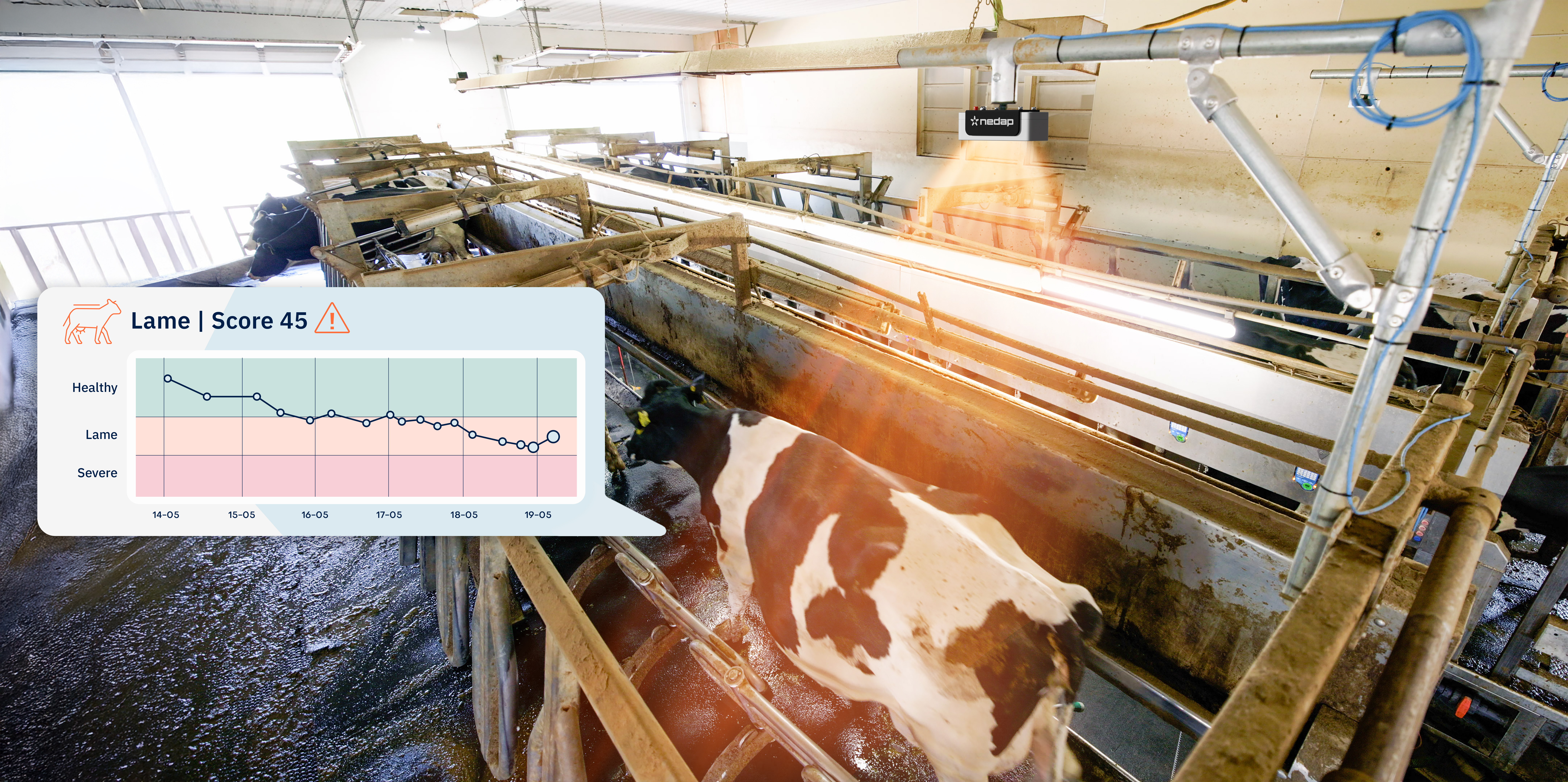
Progressive dairies are reaping big benefits from early adoption of proven lameness detection technology. The performance numbers are sharpening the competitiveness of these herds, and shaping the future standards of animal care.
Industry Reality: The Cost of Lameness
- 22% of U.S. dairy cows are estimated to be walking with a noticeable limp at any given time.
- Average cost per case: ~$337, with published estimates ranging from $76 to $533 depending on severity and associated impacts.
- Milk loss: Clinical lameness has been associated with nearly 800 pounds of lost milk production per lactation.
The Consequences of Waiting Until a Cow Looks Lame
For decades, dairy producers have relied on visual observation and scheduled hoof-trimming protocols to identify cows needing attention. While these practices remain valuable, they share one significant limitation: they often identify problems only after a cow is already experiencing substantial discomfort and performance loss.
By the time lameness becomes obvious, the biological and economic consequences are already underway. Milk production may have declined, reproductive performance may be compromised, and the likelihood of recovery becomes increasingly difficult.
The challenge facing modern dairy operations is clear:
How do we move from reacting to lameness to preventing it? The answer increasingly lies in continuous monitoring technologies that detect mobility changes long before they are visible to the human eye.
Early Intervention Changes Everything
The dairy industry has spent years optimizing nutrition, genetics, reproduction, and milk quality. Yet mobility management has often depended on periodic observation and labor-intensive pen walks.
Emerging technologies such as SmartSight are redefining this approach by creating a continuous stream of locomotion data every time a cow passes a monitoring point. Rather than evaluating cows occasionally, farms gain the ability to assess locomotion multiple times each day.
The result is a fundamental shift: Instead of finding lame cows, farms can identify cows trending toward lameness and intervene earlier.
One Wisconsin customer described the difference this way:
“The most valuable thing I’ve seen on SmartSight is you’re checking every cow three times a day. Every time they walk past the reader, you have a score that you can trust.”
This transition from periodic observation to continuous monitoring helps producers focus on the animals most in need of timely attention.
Why Timing Matters More Than Ever
Real-world farm data consistently demonstrates that the earliest stages of lameness represent the greatest opportunity for intervention.
A Vermont dairy’s analysis showed that the first 180 days in milk represent a critical period for the onset of lame events. Yet this period is often underserved when farms rely solely on scheduled trimming or visual observation.
The implications are significant:
- Earlier detection allows cows to receive attention before severe lesions develop.
- Recovery rates improve when issues are addressed sooner.
- Fewer cows progress into chronic lameness.
- Farms can reduce the burden on hospital and lame-cow pens.
Perhaps most importantly, early intervention aligns with what producers already know: cows perform best when discomfort is minimized before it impacts behavior, production, and longevity.
The Business Case for Locomotion Monitoring
Animal well-being is the foundation of modern dairy farming, but the economic impact of lameness management cannot be ignored.
Across multiple dairies highlighted in SmartSight case studies, producers reported measurable improvements in herd performance after implementing continuous, objective and consistent locomotion monitoring.
Examples include:
- A Pacific Northwest dairy reduced overall lameness from 23% to 18%, representing approximately 400 fewer lame cows. Severe lameness declined from 1.7% to 0.8%.
- An Arizona dairy reduced involuntary lameness culls from 13 a month to just 1, within 4 months.
- The first dairy to implement SmartSight in the Netherlands reported an increase in lifetime milk production of 15,340 pounds after year 2.
These outcomes illustrate an important principle: Lameness management is not simply a hoof-health issue. It is a profitability, longevity, labor-efficiency, and sustainability imperative.
Beyond Detection: Creating a Culture of Continuous Improvement
Technology alone does not transform a herd.
The most successful farms pair monitoring tools with disciplined management processes and actionable protocols. Data becomes valuable only when it drives intervention, evaluation, and continuous improvement.
Several farms used locomotion insights to uncover broader management opportunities, including:
- Improving hoof bath protocols to strengthen sole quality.
- Identifying facility issues leading to hoof injuries.
- Refining trimming strategies based on recovery outcomes.
- Redirecting labor toward high-priority animals requiring attention.
The greatest value emerges when lameness data becomes part of everyday decision-making rather than an isolated report.
Longevity: The New Metric of Success
Historically, many producers accepted lameness as an unavoidable aspect of dairy production. However, today’s leading operations are challenging that assumption.
Two-year results from the first SmartSight installation demonstrated reductions in overall cull rate, fewer lameness-related culls, increased lifetime milk production, and longer productive life within the herd.
These outcomes point toward a broader industry trend: The future of dairy profitability is increasingly tied to helping cows stay healthy, productive, and in the herd longer.
When mobility improves, producers often see positive ripple effects throughout the operation—from reduced replacement pressure and lower treatment costs to greater lifetime performance.
The Future of Dairy Is Proactive, Not Reactive
As labor becomes more challenging to source and herd sizes continue to grow, the ability to evaluate every cow consistently becomes increasingly difficult through observation alone.
The next generation of herd management will rely on technologies that help producers identify risks earlier, prioritize attention more effectively, and act with greater confidence.
Continuous mobility monitoring isn’t replacing stockmanship.
It’s enhancing it.
As one California dairy producer explained:
“A lame cow to me used to be an animal with a problem that I could see. Now we have cameras picking up issues that only she can feel. It enhanced our eyes.”
That statement captures the future of dairy management perfectly.
The goal is no longer simply finding lame cows. It’s preventing severe lameness from ever occurring in the herd.
This is how we redefine animal care and raise the standards of our industry.
Ready to reimagine your lameness management strategy?
Request a free hoof care audit and learn how HoofStrong and SmartSight can help you detect locomotion changes earlier, prioritize intervention, and create healthier, more productive herds.